
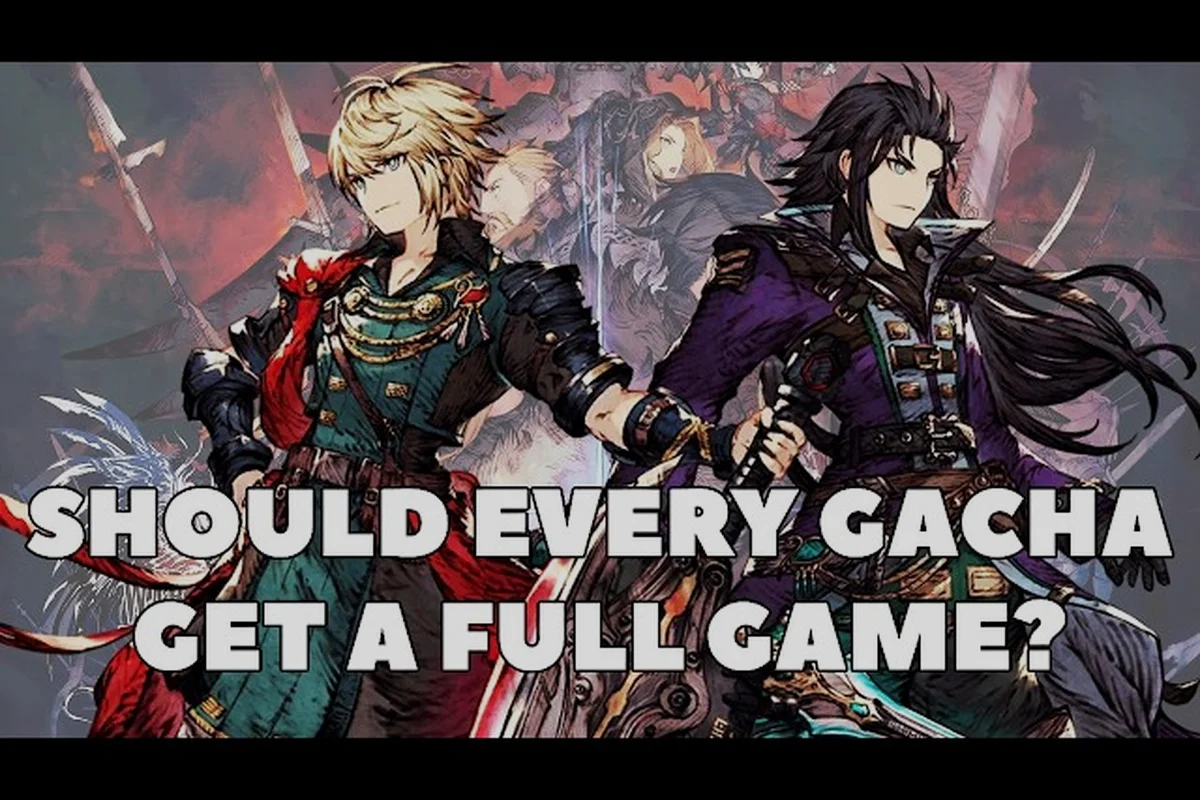
The final fantasy resonance final fantasy brave exvius adaptation transforms the 2015 mobile classic into a full console RPG, and understanding how it reshapes the Lapis arc matters because it changes both story delivery and combat expectations. Square Enix and LANCARSE rebuilt this world in HD-2D with traditional turn-based combat, releasing October 22, 2026 across Nintendo Switch, Switch 2, PS5, Windows, and Xbox Series X/S. If you played Brave Exvius for years or never touched it, this breakdown covers the adaptation's key narrative shifts, the Veritas of the Dark as antagonists, and the Sworn Six lore that drives the conflict. Get the full picture before you step into Grandshelt.
According to the Final Fantasy Resonance Wikipedia entry, the mobile title's adaptation of Final Fantasy Brave Exvius characters and mechanics was designed to preserve the original turn-based combat system while introducing new resonance-based elemental synergies.
The Adaptation Journey from Brave Exvius to Resonance
The Lapis Arc's Narrative Compression in Resonance
Resonance adapts only Brave Exvius' first story arc, "Lapis," compressing years of mobile-exclusive gacha content into a 40-hour console RPG. The Wikipedia source confirms this arc focuses on Rain, Lasswell, Lid, and Fina protecting the world's magic crystals from the Veritas of the Dark. Notably, the mobile game's filler episodes—like the Mobliz Shipyard side quests—are restructured into main-story beats, ensuring the crystal theft sequence maintains narrative momentum without the original's grinding requirements. This is the first time the Lapis arc receives a linear, microtransaction-free narrative treatment.
Rain's Party Roles: Tank, Support, and Engineer Synergy
Rain's knight class in Resonance is rebalanced as a dedicated tank, with his Cover ability redirecting 50% of incoming damage from Lasswell and Fina, a stat line directly lifted from his Brave Exvius 5-star form. Lid, the aspiring engineer, provides the party's only source of mechanical debuffs—her "Dismantle" skill reduces enemy defense by 30% for two turns, a crucial setup for Rain's "Sword of Light" finisher. Fina's amnesiac summoner role ties directly to the crystal lore, as her "Crystal Veil" buff grants the party immunity to the Veritas' elemental seal effects, making her mandatory for the Grandshelt Castle boss fight.
The final fantasy resonance based on brave exvius premise is straightforward: it adapts the mobile game's first story arc, known as Lapis, into a standalone experience with no microtransactions and no gacha mechanics. That single decision reshapes everything about how the narrative unfolds, because the original mobile structure drip-fed story chapters between grinding sessions, while Resonance delivers a continuous, cinematic campaign. The Steam store page confirms a standard edition at US$49.99 and a Digital Deluxe at US$59.99, with a pre-order bonus featuring the Magitek Airship and Squire Starter Pack.
For veterans, the most striking change is the shift from ATB (Active Time Battle) to traditional turn-based combat. Brave Exvius players who remember frantically tapping abilities before the ATB gauge filled will find Resonance's pace more deliberate and tactical. Enemies are no longer simple sprite encounters either; the HD-2D presentation gives every monster and boss a diorama-like presence that changes how you read attack tells and positioning.
The adaptation also compresses and refines the Lapis arc's pacing. Where the mobile version could stretch a single story beat across weeks of daily logins, Resonance moves at the speed of a modern JRPG, which means some side characters get less screen time while the core cast of Rain, Lasswell, Lid, and Fina carries more dramatic weight. Community reports from the IGN preview sessions highlight that the demo's Grandshelt section already feels denser than the equivalent mobile content, with more environmental storytelling packed into the town's streets and castle corridors.
| Feature | Brave Exvius (2015) | Resonance (2026) |
|---|---|---|
| Combat System | ATB with ability chains | Traditional turn-based |
| Story Delivery | Gacha-gated chapters | Full continuous campaign |
| Monetization | Free-to-play with gacha | US$49.99 / US$59.99 |
| Visual Style | 2D sprites | HD-2D diorama |
| Platform | iOS / Android | Switch, PS5, PC, Xbox |
The Masked Cabal: How the Veritas Oppose Rain's Party
The final fantasy resonance veritas of the dark lore centers on a cabal of masked warriors who serve as the primary opposition to Rain and his companions. Unlike typical Final Fantasy villains who monologue about power and destruction, the Veritas operate with a cold, ritualistic purpose tied to the world's magic crystals. Their masks are not just aesthetic choices; they symbolize the sworn oaths each member took when joining the order, and removing one carries narrative weight that the game explores through character-specific side quests.
The final fantasy resonance antagonist guide needs to address the hierarchy within the group. The Veritas of the Dark are led by a figure whose identity connects directly to Rain's family history, a twist that the mobile version handled through years of slow-burn reveals but Resonance compresses into a tighter dramatic arc. According to the IGN preview, Rain's complicated relationship with his father is a central emotional pillar, and the Veritas exploit that bond repeatedly throughout the Lapis story.
What makes the Veritas compelling as antagonists is their moral framework. They believe the crystals' power is corrupting the world and that their intervention, however brutal, is a necessary purification. This creates a philosophical clash with Rain's idealism, because he sees the crystals as the source of life and protection while the Veritas view them as a ticking catastrophe. The game presents both perspectives through lore documents and optional conversations, letting you decide where the truth lies.
| Veritas Member | Role in Lapis Arc | Key Motivation |
|---|---|---|
| Veritas of the Dark (leader) | Primary antagonist | Crystal purification |
| Veritas of the Earth | Early-game obstacle | Protect sacred grounds |
| Veritas of the Flame | Mid-game confrontation | Test the heroes' resolve |
| Veritas of the Water | Strategic manipulator | Divide the party |
Sworn Six Lore and the Crystal Connection
HD-2D Conversion: From Gacha Sprites to Turn-Based Combat
The shift from Final Fantasy Brave Exvius' ATB system to Final Fantasy Resonance's traditional turn-based combat fundamentally changes encounter pacing. In Brave Exvius, the ATB gauge allowed rapid-fire chains and esper finishers; Resonance instead forces deliberate action ordering, with enemies stunned between turns. The IGN demo at Grandshelt showed this most clearly in the Dwarves Forge encounter, where Rain's Guard stance negated a full 100% of a goblin's charge attack, something impossible in the original's real-time gauge. This makes positioning and ability timing—not reaction speed—the core skill check.
How Each Veritas Targets an Elemental Crystal
The Veritas of the Dark operate as a coordinated antagonist unit, each targeting a specific elemental crystal to destabilize Grandshelt's magical infrastructure. In the IGN demo, the Veritas' assault on the Earth Crystal triggers a multi-phase boss encounter where Rain must defend the crystal core for three consecutive turns while Lasswell flanks the Veritas of the Water. Unlike Brave Exvius' single-target boss design, Resonance's Veritas battles feature simultaneous multi-enemy engagement, requiring players to split damage output between the primary Veritas and their summoned minions, a mechanic absent from the original mobile format.
The final fantasy resonance sworn six lore expands beyond the Veritas of the Dark to encompass a larger mythological framework. The Sworn Six are legendary figures from Paladia's ancient history who each bound themselves to one of the world's elemental forces, and their legacy directly shapes the Lapis conflict. The Veritas of the Dark claim to be the Sworn Six's true inheritors, which puts Rain's party in the position of challenging not just living enemies but an entire historical narrative.
This is where the adaptation's world-building shines, because Resonance gives you the full Sworn Six backstory through a combination of main-story revelations and optional lore tomes scattered across the world. The mobile version referenced these figures obliquely, but the console adaptation commits to making their history tangible. Each of the six has a corresponding crystal alignment, and the game's magic system draws power from these same alignments, which means understanding the Sworn Six directly improves your combat effectiveness.
The connection to the crystals is not merely thematic; it is mechanical. The crystal resonance system in combat rewards you for matching your party's elemental affinities to the Sworn Six alignments, and the deeper your understanding of the lore, the more effectively you can exploit enemy weaknesses. Players who skip the lore tomes will find late-game bosses significantly harder, because the game expects you to have internalized the elemental relationships. For a deeper dive into how these mechanics interconnect, the magic system lore guide breaks down the elemental wheel and its combat applications.
The Sworn Six also explain why the Veritas of the Dark are so dangerous. Each Veritas member channels a portion of a Sworn Six's power, which means defeating them is not simply a matter of out-leveling the content. You must understand which elemental counter-strategies work against each member, and the game's boss design rewards players who study the lore before engaging. This integration of story and mechanics is the adaptation's most significant improvement over the mobile original, where lore and gameplay often felt disconnected.
Story Recap and Key Narrative Beats
A final fantasy resonance story recap must begin with the premise: Rain, a knight of Grandshelt, discovers that the world's magic crystals are under threat from the Veritas of the Dark, and he assembles a party to protect them. The group includes Lasswell, his childhood best friend and a skilled swordsman; Lid, an aspiring master engineer following in Cid's footsteps; and Fina, an amnesiac summoner whose connection to the crystals runs deeper than anyone initially suspects.
The story's first act establishes the political landscape of Lapis, with Grandshelt as a kingdom caught between tradition and change. Rain's relationship with his father, the king, forms the emotional core, because the elder's decisions have created the conditions for the Veritas to gain power. The IGN demo explored Grandshelt, the Dwarves Forge, and the Mobliz Shipyard, and each location introduces a different facet of the conflict, from political intrigue to industrial sabotage to naval warfare.
As the party pursues the Veritas across Lapis, they uncover the truth about the Sworn Six and the crystals' true nature. The adaptation adds new scenes that contextualize the Veritas' motivations, making them more sympathetic than their mobile counterparts. This is a deliberate choice by the writers, because it transforms the final confrontation from a simple good-versus-evil battle into a morally ambiguous choice about the world's future.
The ending structure differs from the mobile version in one significant way: Resonance provides a definitive conclusion to the Lapis arc, whereas Brave Exvius left the story open for ongoing gacha updates. This means the adaptation has to resolve threads that the mobile game intentionally left dangling, and the writers have made some bold decisions about character fates that will surprise veterans. If you want the full narrative breakdown without spoilers, the story guide covers each act in detail.
Character Dynamics and Party Composition
The adaptation's success depends heavily on how well the four main characters translate from mobile sprites to HD-2D personalities. Rain is the idealistic knight whose goodness sometimes reads as naivety, but the script gives him enough doubt and vulnerability to keep him relatable. Lasswell provides the counterbalance, more pragmatic and willing to make hard choices that Rain would hesitate to accept. Their friendship is tested repeatedly throughout the Lapis arc, and the adaptation adds several new conversations that deepen their bond.
Lid represents the game's thematic interest in technology versus magic, and her engineering skills open up gameplay options that the other characters lack. Her scenes at the Dwarves Forge in the demo showcase how the HD-2D presentation brings mechanical detail to life, with gears turning and steam hissing in ways that static sprites never captured. Fina is the wildcard, and her amnesia serves as a narrative device that lets the game reveal crystal lore organically as her memories return.
The party composition matters beyond story, because each character fills a distinct combat role. Rain is the balanced frontline fighter, Lasswell excels at physical damage and debuffs, Lid provides engineering-based support and item efficiency, and Fina handles white magic and summoning. The turn-based combat system rewards you for rotating characters based on enemy weaknesses, and the game encourages experimentation rather than locking you into a single optimal party.
| Character | Combat Role | Story Function |
|---|---|---|
| Rain | Balanced attacker | Emotional protagonist |
| Lasswell | Physical damage / debuffs | Pragmatic counterweight |
| Lid | Engineering support | Technology vs. magic theme |
| Fina | White magic / summoning | Crystal lore exposition |
Frequently Asked Questions
How is the final fantasy resonance final fantasy brave exvius adaptation different from the mobile original?
The adaptation removes gacha mechanics and microtransactions entirely, presenting the Lapis arc as a complete console RPG. Combat shifts from ATB to traditional turn-based, and the story is compressed into a continuous campaign rather than drip-fed chapters. The HD-2D presentation also adds environmental storytelling that the mobile sprites could not convey.
Who are the Veritas of the Dark in Resonance?
The Veritas of the Dark are the primary antagonists, a masked order that believes the world's magic crystals are corrupting Lapis. They claim to be the true inheritors of the Sworn Six's legacy, and each member channels a portion of that ancient power. Their leader has a personal connection to Rain's family history.
What is the Sworn Six lore in the game?
The Sworn Six are legendary figures from Paladia's ancient history who bound themselves to elemental forces. Their legacy shapes the Lapis conflict because the Veritas of the Dark claim their authority. Understanding the Sworn Six alignments directly improves combat effectiveness, since the crystal resonance system rewards matching elemental affinities.
Does the game require knowledge of Brave Exvius to enjoy?
No, the adaptation is designed as a standalone experience. New players receive all necessary context through the story, while veterans will appreciate the expanded scenes and definitive ending. The game resolves threads that the mobile version left open, making it a complete narrative package rather than a continuation.
When does FINAL FANTASY RESONANCE release?
The game releases October 22, 2026 for Nintendo Switch, Switch 2, PS5, Windows, and Xbox Series X/S. The standard edition costs US$49.99, and the Digital Deluxe edition costs US$59.99. Pre-orders include the Magitek Airship and Squire Starter Pack as bonuses.