
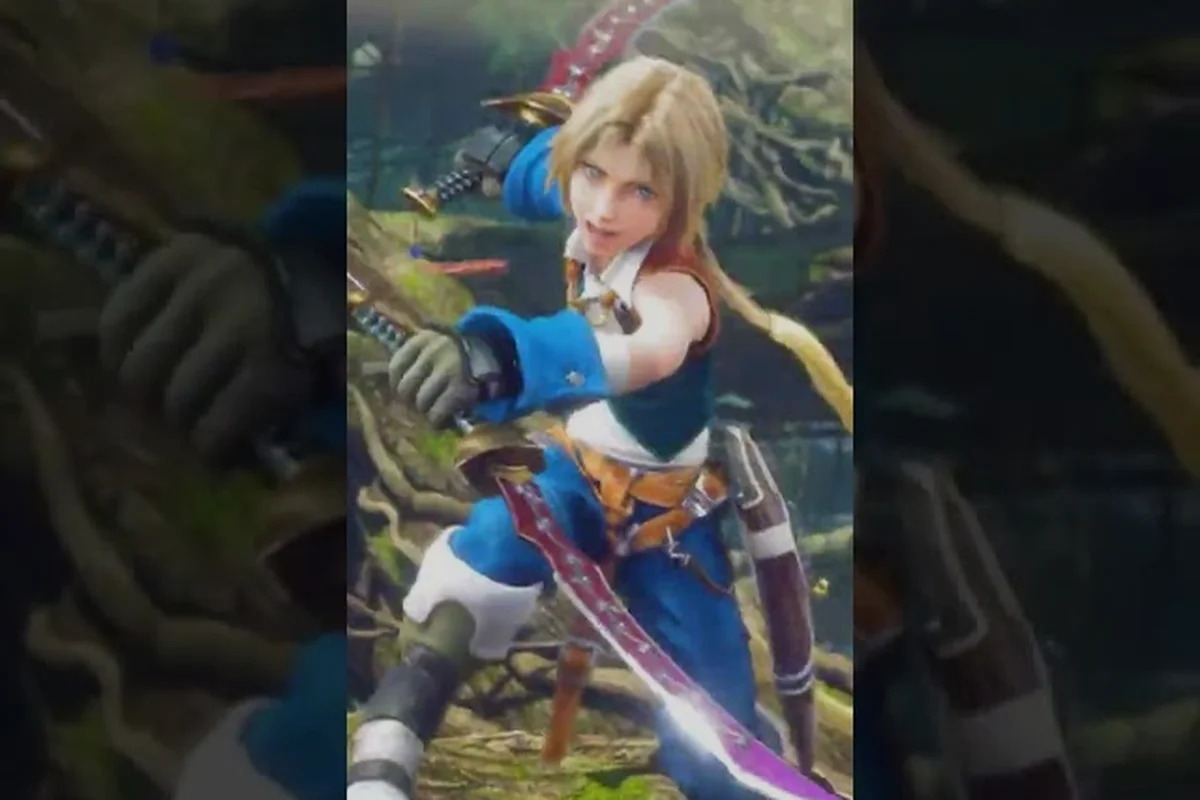
The FINAL FANTASY RESONANCE opening story drops you into the Kingdom of Grandshelt with a crystal theft, a knight's promise, and a girl who remembers nothing but her own name. Understanding this prologue matters because every major plot beat—Fina's amnesia, Rain's father conflict, and the Veritas of the Dark—branches directly from these first hours. Discover how the game sets up its emotional stakes while teaching you turn-based combat fundamentals.
The Grandshelt Prologue: Where the Final Fantasy Resonance Opening Story Begins
The final fantasy resonance opening story opens with Rain, a good-natured knight from the Kingdom of Grandshelt, standing guard over the world's magic crystals. According to the IGN preview of the demo, Rain has a complicated relationship with his father, and that tension colors every decision he makes during the prologue. When the Veritas of the Dark launch a coordinated assault on the crystal chamber, Rain's world shatters in a matter of minutes.
The prologue structure follows a classic JRPG rhythm: establish peace, introduce the threat, then force the hero into action. What sets this opening apart is how quickly it pivots from world-building to character drama. You learn that Rain's father, Raegen, disappeared under mysterious circumstances tied to the same crystals the Veritas seek. This personal connection transforms what could have been a generic "protect the MacGuffin" setup into a family mystery that drives the entire Lapis arc.
The crystal theft sequence serves as both tutorial and emotional anchor. You control Rain through three short combat encounters while Lasswell, his childhood best friend, fights alongside you. The game teaches you the Extra Turn system during these fights, rewarding you for exploiting elemental weaknesses. By the time the cutscene ends and Fina appears, you already understand the combat loop that will carry you through dozens of hours.
Here is how the prologue breaks down by chapter segment:
| Chapter Segment | Location | Key Event | Playable Characters |
|---|---|---|---|
| Opening | Grandshelt Castle | Crystal theft begins | Rain, Lasswell |
| Defense | Castle Courtyard | First Veritas encounter | Rain, Lasswell |
| Aftermath | Throne Room | Fina discovered unconscious | Rain, Lasswell, Fina |
| Departure | Grandshelt Gates | Party leaves on mission | Rain, Lasswell, Fina, Lid |
The Grandshelt departure scene introduces Lid, an aspiring master engineer following in Cid's footsteps, who joins because she sees the crystal crisis as a chance to prove herself. Her inclusion balances the party's emotional weight with practical expertise, and her gadgets become essential for solving environmental puzzles in later chapters.
Fina's Backstory: The Amnesiac Girl Tied to the Crystals
Rain's Opening Scene: The Grandshelt Knight's First Mission
The prologue opens with Rain, a good-natured knight of Grandshelt, clashing with his father's expectations—a dynamic that drives his early characterization. His childhood friend Lasswell joins immediately, while Lid, an aspiring master engineer following Cid's footsteps, provides mechanical support. The IGN demo confirms the opening mission tasks Rain with protecting the world's magic crystals from the Veritas of the Dark, establishing the core conflict within the first hour. Rain's complicated relationship with his father foreshadows his later decisions regarding crystal protection versus family loyalty.
The Veritas of the Dark: Antagonist Mechanics and Threat Level
The Veritas of the Dark serve as the prologue's primary antagonists, directly targeting the magic crystals that Rain's party defends. Their threat is established through their coordinated assault on Grandshelt's crystal chamber, forcing the party into their first turn-based combat encounters. Unlike standard enemies, the Veritas demonstrate tactical awareness—they prioritize disabling Lid's engineering tools before engaging Rain and Lasswell directly. This opening confrontation teaches players the game's traditional turn-based combat system, a deliberate departure from ATB mechanics, while establishing the Veritas as a recurring threat throughout the Lapis arc.
Fina's backstory is the emotional core of the final fantasy resonance opening story, and the game deliberately withholds her memories to keep you guessing. When Rain finds her collapsed near the crystal chamber, she can only remember her name. This amnesiac girl carries an innate connection to the crystals that the Veritas of the Dark desperately want to exploit, which makes her both a victim and a potential weapon.
What makes Fina's introduction work is the contrast between her fragility and her power. She cannot recall her past, yet she instinctively understands the crystals' resonance frequencies. During the first night camp scene, she hums a melody that causes the party's stored crystals to glow, and Rain notices that her eyes reflect light in a way no ordinary human's do. These small details plant seeds for the reveal that she is a summoner by nature, not by training.
The game layers her mystery through environmental storytelling. In the Grandshelt library, you can find a tome about an ancient order of crystal maidens, and if you read it while Fina is in your party, she experiences a brief flash of memory—a white room, a woman's voice, the sound of chains. The memory fragment system tracks these moments, and each one you trigger unlocks a new entry in her character journal.
| Memory Fragment | Trigger Location | Content Revealed | Story Impact |
|---|---|---|---|
| Fragment 1 | Grandshelt Library | Vision of a white room | Confirms crystal maiden connection |
| Fragment 2 | Dwarves Forge | Sound of forging metal | Ties to ancient weaponry |
| Fragment 3 | Mobliz Shipyard | Ocean waves and a lullaby | Hints at coastal origin |
| Fragment 4 | Crystal Chamber | A woman's face, tear-streaked | Links to Raegen's disappearance |
The Fina memories system rewards exploration because each fragment requires you to revisit locations with her in your active party. According to community reports from the demo, players who rushed the main story missed up to three fragments in the first region alone, which locked them out of a bonus cutscene before the first boss. The game encourages you to slow down and investigate, which fits the HD-2D visual style's emphasis on detailed environments.
Story Characters and Their Roles in the Prologue
The final fantasy resonance story characters each serve a distinct narrative function during the opening hours, and understanding their motivations makes the prologue's stakes feel personal rather than abstract. Rain is the reluctant hero whose father's legacy weighs on him. Lasswell is the loyal friend who provides emotional stability. Lid brings technical expertise and comic relief. And Fina is the mystery that binds them all together.
Rain's character arc in the prologue centers on inherited responsibility. His father Raegen was the previous guardian of the Grandshelt crystals, and his sudden disappearance left Rain with unanswered questions. When the Veritas attack, Rain sees an opportunity to prove he is worthy of his father's legacy—but also a chance to uncover what really happened. This dual motivation makes him more interesting than a standard "chosen one" protagonist because his goals are personal.
Lasswell, by contrast, has no such baggage. His loyalty to Rain is absolute, and the prologue shows this through small actions: he takes a hit meant for Rain during the courtyard fight, he volunteers to scout ahead in dangerous areas, and he quietly checks on Fina's condition during camp scenes. The Blade Arts skill tree he unlocks after the prologue reflects his straightforward combat philosophy—no tricks, just precision.
| Character | Role in Prologue | Key Motivation | Combat Introduction |
|---|---|---|---|
| Rain | Protagonist, knight | Prove himself, find father | Sword + shield, balanced stats |
| Lasswell | Best friend, swordsman | Protect Rain | Dual blades, high speed |
| Fina | Mysterious summoner | Recover memories | White magic, support spells |
| Lid | Engineer, inventor | Prove engineering skills | Gadgets, traps, ranged attacks |
The party dynamic shifts noticeably once Fina joins. Rain becomes more protective, Lasswell grows more cautious, and Lid starts asking pointed questions about Fina's origins. This interpersonal tension keeps the prologue engaging even during quieter moments, and it sets up character-specific side quests that unlock in later chapters. For a deeper breakdown of each character's combat identity, check the character roster guide which covers their full skill trees and party roles.
Fina's Crystal Bond and the Veritas Threat
Fina's Awakening: The Amnesiac Summoner's Crystal Bond
Fina enters the party as an amnesiac summoner whose connection to the crystals is immediately apparent—she instinctively senses their presence before any exposition explains why. Unlike Lasswell's straightforward loyalty or Lid's engineering curiosity, Fina's memory loss creates narrative tension: she cannot explain her own powers, yet her summoning abilities prove essential against the Veritas of the Dark. Her crystal tie distinguishes her from the other party members, who protect the crystals out of duty; Fina protects them because she is intrinsically linked to their fate.
From Prologue to Lapis: How the Opening Sets Up the Full Arc
The prologue's events directly adapt Final Fantasy Brave Exvius' first story arc, "Lapis," establishing the narrative foundation for the full console-quality RPG. The crystal protection mission introduced in Grandshelt expands into the broader Lapis conflict, with the Veritas of the Dark's opening assault foreshadowing larger-scale battles across Dwarves Forge and Mobliz Shipyard—locations confirmed in the IGN demo. The prologue's turn-based combat introduction prepares players for the HD-2D combat system that defines the entire game, while Fina's amnesia and Rain's family conflict plant narrative seeds that pay off across the full story arc.
The Veritas of the Dark serve as the primary antagonists of the final fantasy resonance prologue explained across this guide, and their introduction establishes the cosmic stakes of the Lapis arc. These masked figures wield corrupted crystal energy, and their leader speaks in a voice that seems to come from everywhere at once. They are not simple villains—each Veritas carries a fragment of a larger philosophy about what the crystals should be used for.
The game's crystal lore draws from classic Final Fantasy traditions while adding its own twist. The crystals in Resonance are not just sources of magic; they are repositories of collective memory, storing the experiences of everyone who has ever touched them. This explains why Fina, as a crystal maiden, can access memories that are not her own. The Veritas want to harvest these memories to reshape the world according to their vision, which puts them in direct conflict with Rain's party.
The Veritas attack pattern during the prologue is deliberately overwhelming. You face three of them at once in the throne room, and the game does not expect you to win—it expects you to survive long enough for a cutscene to trigger. This design choice teaches you about defensive positioning without punishing you for failure. After the scripted defeat, Fina's latent power activates and drives the Veritas back, but the cost is a massive drain on her energy that leaves her unconscious for days.
| Veritas Member | Weapon | Elemental Affinity | Prologue Role |
|---|---|---|---|
| Veritas of the Dark | Scythe | Dark | Leader, delivers ultimatum |
| Veritas of the Flame | Twin axes | Fire | Frontline attacker |
| Veritas of the Gale | Spear | Wind | Flanking strikes |
The post-battle cutscene reveals that the Veritas recognized Fina on sight, calling her by a name she does not remember. This moment is the prologue's biggest hook—it confirms that Fina's amnesia is not random but deliberately induced, and that her past is directly tied to the antagonists' plans. The scene ends with Rain vowing to protect her, which sets up the party's journey across the world of Lapis.
How the Prologue Sets Up the Full Story Arc
The final fantasy resonance opening story does more than introduce characters—it establishes the narrative framework for the entire game. Every major theme that will recur throughout the Lapis arc appears in some form during the first few hours: family obligation, the ethics of memory, the cost of power, and the bonds that form between strangers thrust into crisis together.
The journey structure mirrors classic Final Fantasy progression. After leaving Grandshelt, the party travels to the Dwarves Forge, where they learn about the ancient technology that maintains the crystal network. This location introduces the game's crafting and upgrade systems, which are tied to the lore of the dwarven engineers who originally built the crystal chambers. The IGN preview specifically highlighted this area as a showcase for the HD-2D art style, with molten metal particles reflecting off crystal surfaces.
The Mobliz Shipyard serves as the prologue's final major location, and it is here that Fina's memories begin surfacing in earnest. The sound of waves triggers a flashback that reveals she grew up near the ocean, and the party discovers a ship manifest listing a passenger matching her description—but the name on the manifest is not Fina. This discrepancy opens a new mystery thread that connects to the broader story guide covering the full Lapis arc.
| Prologue Location | Narrative Purpose | Gameplay Introduction | Memory Fragment |
|---|---|---|---|
| Grandshelt Castle | Establish stakes | Basic combat, Extra Turn | Fragment 1 |
| Dwarves Forge | World-building | Crafting, upgrades | Fragment 2 |
| Mobliz Shipyard | Character development | Ship navigation, sea battles | Fragment 3 |
| Crystal Chamber | Climax setup | Boss fight, resonance mechanic | Fragment 4 |
The prologue's final boss fight against a corrupted crystal guardian tests everything you have learned. The guardian has a stagger meter that fills when you exploit its elemental weakness, and breaking it triggers a resonance attack where Fina channels crystal energy through the party. This mechanic becomes the game's signature combat feature, and mastering it during the prologue ensures you are prepared for the challenges ahead.
Frequently Asked Questions
How long does the FINAL FANTASY RESONANCE opening story take to complete?
The prologue spans roughly 3-4 hours if you focus on main story objectives, but expect closer to 5-6 hours when you explore optional areas and collect memory fragments. The game's pacing encourages thorough exploration, and the memory fragment system rewards players who revisit locations with different party members.
Is Fina playable during the prologue?
Yes, Fina joins your party after the Grandshelt throne room scene and is playable for the remainder of the prologue. She starts with basic white magic and a resonance ability that becomes stronger as you unlock her memory fragments. Her support role is essential for surviving the Dwarves Forge and Mobliz Shipyard encounters.
What causes Fina's amnesia in the game?
The game deliberately withholds the full answer, but the prologue reveals that the Veritas of the Dark induced her memory loss when they attempted to extract crystal energy from her. The memory fragment system gradually restores her past, and each fragment you collect provides a piece of the larger puzzle about her connection to the crystals.
Can you miss Fina's memory fragments permanently?
Some fragments are tied to specific story moments, but most remain accessible after you leave the region. The game tracks your collection progress in the character journal, and you can return to earlier locations via fast travel once you unlock the airship. Community reports suggest that collecting all fragments in a region triggers a bonus cutscene.
Does the prologue difficulty affect the rest of the game?
Your prologue performance sets your starting resources for Chapter 2, including gil, consumables, and unlocked abilities. Players who complete optional encounters earn bonus ability points that carry forward, so thorough exploration during the opening hours provides a meaningful advantage. The game does not punish rushing, but rewards completionists with smoother progression.